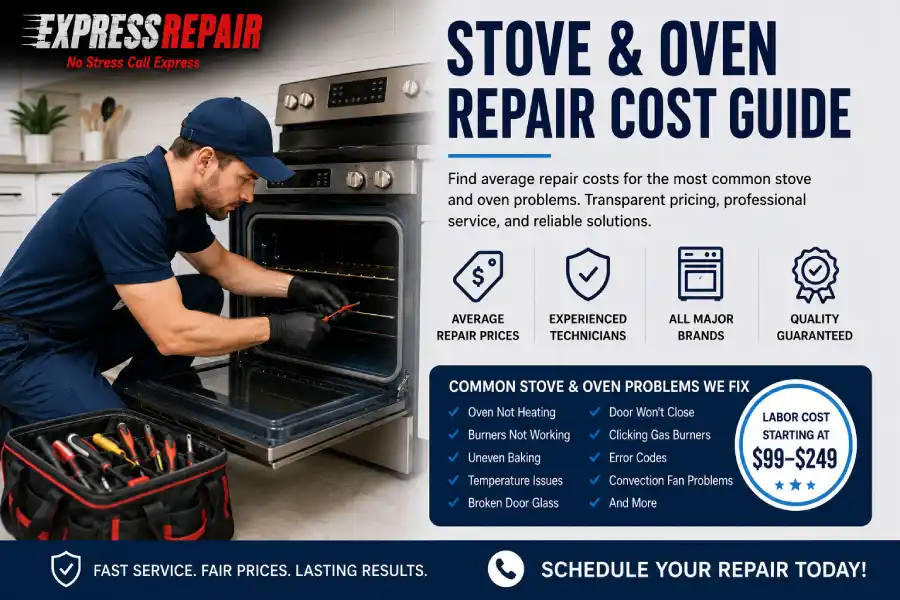
Your stove and oven are among the most frequently used appliances in the kitchen. Whether you're preparing everyday meals or hosting family gatherings, a malfunctioning range can quickly become a major inconvenience.
When a burner won't heat, the oven won't reach temperature, or electronic controls stop responding, professional repair is often a more cost-effective solution than replacing the appliance entirely.
The cost of stove repair, oven repair depends on the failed component, the complexity of the repair, and the labor required to restore proper operation. Below are some of the most common stove and oven repairs along with their average labor costs.
The bake element is the primary heating component located at the bottom of most electric ovens. It generates the heat needed for baking, roasting, and maintaining consistent cooking temperatures.
When the bake element begins to fail, you may notice uneven cooking, extended preheating times, or an oven that does not heat from the bottom. In some cases, the element may visibly blister, crack, or stop glowing altogether.
Ignoring a damaged bake element can affect cooking performance and place additional strain on other oven components. Replacing the element restores proper heating and helps ensure reliable cooking results.
Average Labor Cost: $179–$249
The broil element is located at the top of the oven cavity and provides intense direct heat for broiling, browning, and finishing foods.
A failed broil element may prevent the oven from reaching proper temperatures during broiling functions or cause uneven cooking results. Homeowners often notice that food is no longer browning properly or that the upper heating element never glows.
Replacing a defective broil element restores full cooking functionality and helps maintain consistent performance across all oven settings.
Average Labor Cost: $179–$249
Electric coil burners are responsible for heating cookware on traditional electric ranges.
Over time, burner elements can become damaged, stop heating evenly, or fail completely. Some burners may only partially heat, while others may not heat at all.
Replacing a faulty burner coil helps restore cooking efficiency and improves temperature consistency during meal preparation.
Average Labor Cost: $99–$199
Glass-top ranges use radiant surface elements beneath the cooktop surface to generate heat.
When a radiant element fails, the burner may heat unevenly, cycle improperly, or stop heating completely. Cracked elements can also create safety concerns and impact cooking performance.
Prompt replacement helps maintain safe operation and ensures the cooktop heats efficiently.
Average Labor Cost: $179–$249
The infinite switch controls the heat output of electric surface burners.
A faulty switch can cause burners to remain on high heat, fail to heat properly, or become completely unresponsive. Homeowners may notice difficulty adjusting cooking temperatures or inconsistent burner performance.
Replacing the switch restores proper burner control and helps improve cooking precision.
Average Labor Cost: $99–$199
The electronic control board serves as the central operating system for modern ovens and ranges.
When the board fails, the appliance may display error codes, fail to heat correctly, experience temperature fluctuations, or stop functioning entirely. Since the board controls many critical systems, failures can create a variety of symptoms.
Professional diagnosis and replacement help restore reliable operation and proper communication between appliance components.
Average Labor Cost: $199–$249
The oven temperature sensor, often called an RTD sensor, monitors internal cooking temperatures and communicates with the control board.
A defective sensor can cause inaccurate temperatures, uneven baking, overcooked food, or ovens that never reach the desired setting. Temperature-related complaints are often linked to sensor failure.
Replacing the sensor helps maintain accurate temperature regulation and improves cooking consistency.
Average Labor Cost: $99–$199
Cracked, shattered, or damaged oven door glass should be replaced promptly for safety and efficiency reasons.
Damaged glass can reduce insulation, increase heat loss, and create potential safety hazards in the kitchen. Even small cracks can worsen over time due to repeated heating and cooling cycles.
Replacing the glass restores safety, energy efficiency, and the appearance of the appliance.
Average Labor Cost: $179–$249
Oven door hinges allow the door to open and close smoothly while maintaining a proper seal.
When hinges become bent or worn, the door may not close fully, allowing heat to escape during cooking. This can increase cooking times and affect temperature accuracy.
Replacing damaged hinges restores proper alignment and helps maintain efficient oven operation.
Average Labor Cost: $199–$249
The oven door seal, also known as a heat gasket, helps contain heat inside the cooking cavity.
A worn or damaged seal allows heat to escape, causing temperature inconsistencies and longer cooking times. Homeowners may notice excessive heat around the door or difficulty maintaining baking temperatures.
Replacing the seal improves energy efficiency and cooking performance.
Average Labor Cost: $99–$199
Convection ovens use a fan motor to circulate hot air throughout the oven cavity for more even cooking.
A failing fan motor may cause uneven baking, longer cooking times, unusual noises, or poor airflow. Without proper circulation, food may cook inconsistently on different racks.
Replacing the fan motor restores convection performance and improves cooking results.
Average Labor Cost: $179–$249
The terminal block connects the appliance to the home's electrical supply and distributes power throughout the range.
Burned wiring, loose connections, or damaged terminals can cause intermittent power loss, heating failures, or visible signs of electrical damage. These issues should be addressed quickly to prevent additional electrical problems.
Repairing or replacing the terminal block helps ensure safe and reliable operation.
Average Labor Cost: $179–$249
Gas cooktops use spark electrodes to ignite burners safely and efficiently.
A faulty electrode may prevent burners from lighting, cause repeated clicking sounds, or require multiple attempts before ignition occurs. Moisture, wear, and grease buildup commonly contribute to failure.
Replacing the electrode restores reliable ignition and improves cooking convenience.
Average Labor Cost: $179–$249
Indicator lights notify users when burners or oven components are active and potentially hot.
A failed light or switch assembly may create confusion about burner status and reduce safety awareness during cooking. Electrical faults can also affect related control functions.
Repairing these components restores proper functionality and helps improve kitchen safety.
Average Labor Cost: $99–$199
Electric coil ranges use drip bowls and receptacle blocks to support burner elements and maintain electrical connections.
Over time, receptacles can burn out, become loose, or develop poor electrical contact. Homeowners may notice burners heating intermittently or failing altogether.
Replacing damaged receptacles helps restore proper burner performance and prevents further electrical issues.
Average Labor Cost: $99–$199
Many modern ovens use cooling fans to regulate internal temperatures and protect electronic components.
A failed cooling fan may cause overheating, error codes, excessive cabinet temperatures, or automatic shutdowns. In some cases, the oven may continue running but operate less efficiently.
Replacing the cooling fan helps protect sensitive components and extends the life of the appliance.
Average Labor Cost: $179–$249
Minor repairs such as replacing a door seal or indicator light typically cost less than major repairs involving electronic controls, convection systems, or multiple heating components.
Gas ranges contain ignition systems, gas valves, and burner components that require specialized diagnostics and repairs, while electric ranges rely heavily on heating elements and electronic controls.
Older stoves and ovens may require additional troubleshooting and can sometimes involve discontinued replacement parts.
Certain manufacturer-specific components may require special ordering, which can affect repair timelines and costs.
Addressing heating issues, ignition problems, or temperature inconsistencies early can often prevent more extensive repairs later.
A failed bake element, broil element, temperature sensor, or control board can prevent the oven from reaching the desired temperature.
Faulty burner elements, infinite switches, spark electrodes, or damaged receptacles are among the most common causes of burner failures.
Temperature sensor issues, convection fan failures, or control board malfunctions can lead to inconsistent cooking results.
Worn hinges, damaged seals, or alignment issues can allow heat to escape and reduce cooking efficiency.
A faulty spark electrode, ignition system component, or gas flow issue may prevent burners from lighting properly.
Electronic control board failures and sensor problems often trigger fault codes and prevent normal operation.
Keeping burners free from food debris and grease buildup helps improve performance and reduces wear on ignition components.
Damaged oven gaskets allow heat to escape, increasing cooking times and energy consumption.
Repeated impact can damage hinges, glass panels, and alignment components over time.
If your oven is taking longer to cook food or burners are heating unevenly, prompt repairs can help prevent larger failures.
Proper airflow helps protect electronic controls and cooling systems from overheating.
Periodic inspections can identify worn components before they fail and help extend the lifespan of your stove or oven.
Whether your oven won't heat, your burners aren't working properly, or you're dealing with temperature control issues, professional repair can help restore safe and reliable operation.
Our experienced technicians service all major stove and oven brands and can diagnose most problems quickly. Contact us today to schedule professional appliance repair service and get your kitchen back up and running.
 Request Service
 (647) 492-7773
