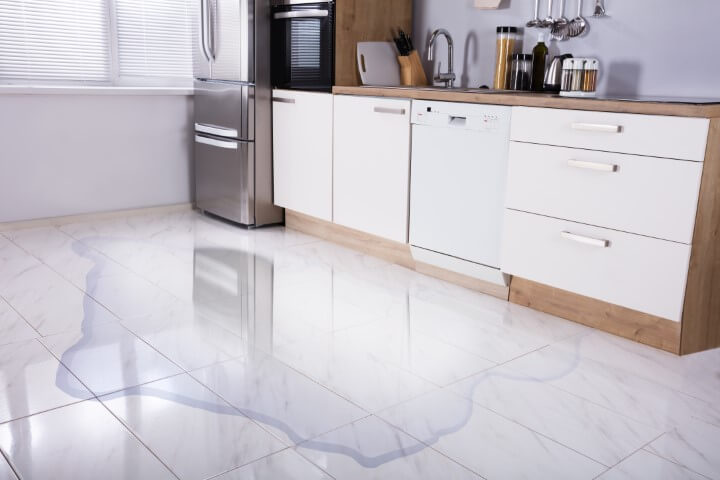
If your fridge is leaking water, the most common causes are a clogged defrost drain, a frozen drain tube, a damaged water supply line, a faulty water filter, or a cracked drain pan. In most cases, cleaning the defrost drain or inspecting the water line can solve the issue quickly. If water continues to accumulate inside or underneath the refrigerator, professional diagnosis may be necessary.
A refrigerator leaking water is one of the most common appliance problems homeowners face. Water pooling under or inside your refrigerator can damage flooring, create mold growth, and reduce appliance efficiency.
Modern refrigerators from brands such as Whirlpool, Samsung, LG, GE, Frigidaire, KitchenAid, and Maytag rely on drainage systems, water lines, and ice makers that can occasionally fail or become blocked.
Understanding the root cause helps prevent costly repairs and food spoilage.
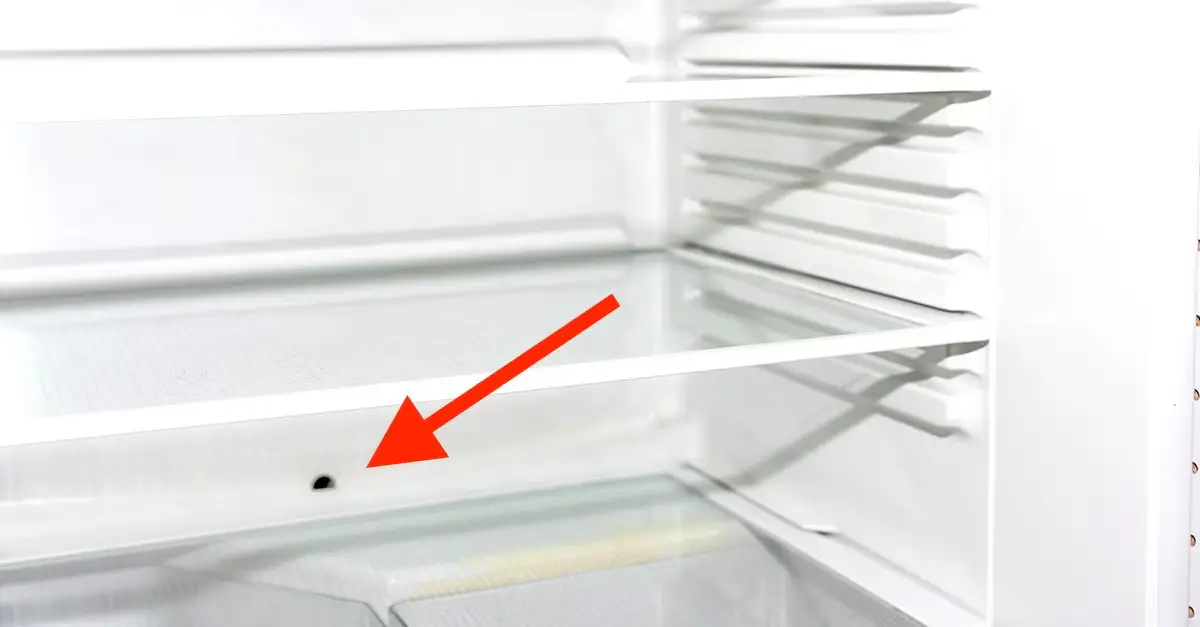
The defrost drain removes excess water generated during automatic defrost cycles. Over time, food particles, debris, and ice can block the drain.
Water collecting under crisper drawers
Water pooling inside the refrigerator compartment
Ice buildup near the rear panel
Locate the defrost drain.
Flush it with warm water.
Remove debris using a flexible cleaning brush.
Repeat until water flows freely.
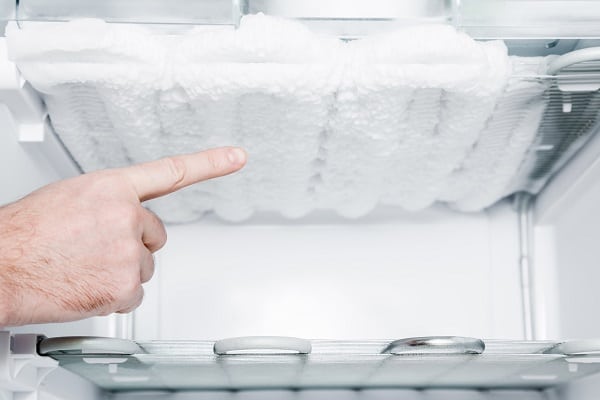
A frozen drain tube prevents melted frost from reaching the drain pan.
Ice accumulation at the bottom of the fridge
Water leaks appearing after defrost cycles
Use warm water to melt the blockage.
Carefully thaw the drain opening.
Avoid using sharp tools that may damage components.
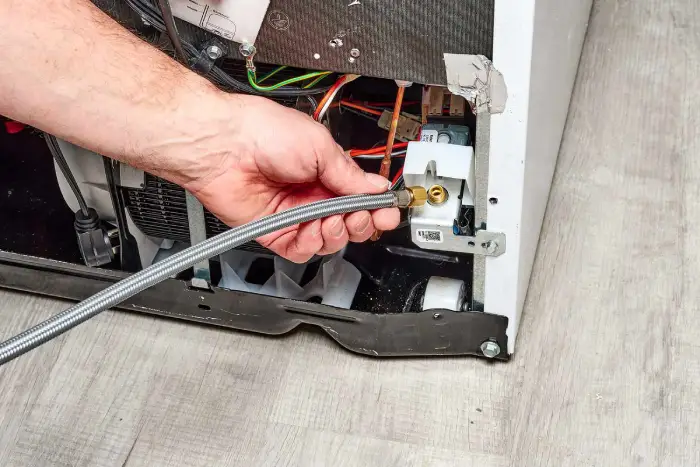
Refrigerators with ice makers and water dispensers use a water supply line that can crack, loosen, or become damaged.
Water underneath the refrigerator
Continuous leaking behind the appliance
Reduced water dispenser performance
Inspect the tubing connections.
Tighten loose fittings.
Replace damaged water lines immediately.
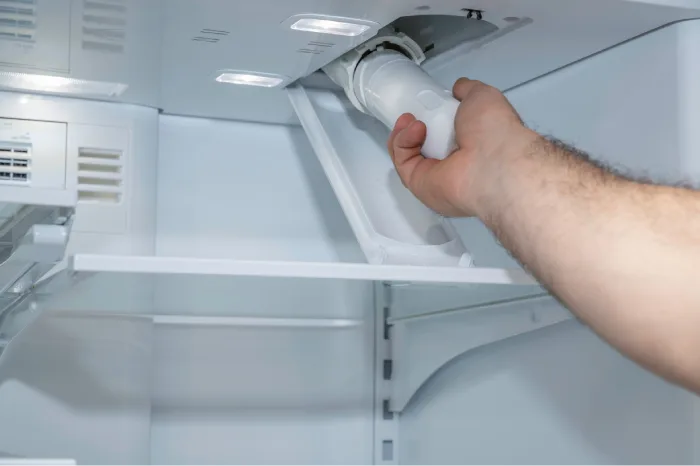
A worn-out or improperly installed water filter can cause leaks.
Water dripping near the filter housing
Leaks after filter replacement
Reduced water quality
Reinstall the filter correctly.
Replace old filters according to manufacturer recommendations.
Check O-rings and seals for damage.
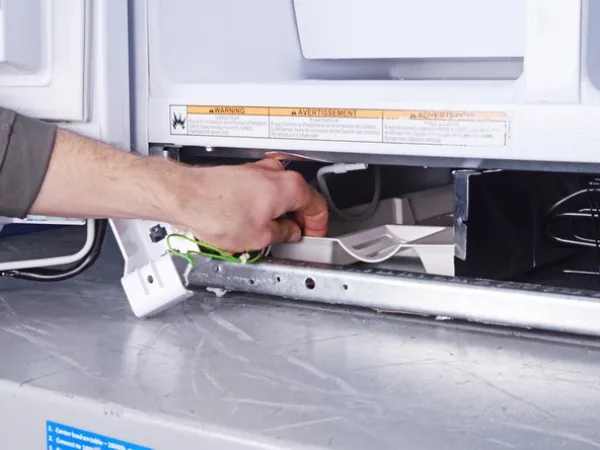
The drain pan collects condensation and defrost water before evaporation.
Water under the refrigerator
Visible cracks in the drain pan
Inspect the pan.
Replace it if damaged.
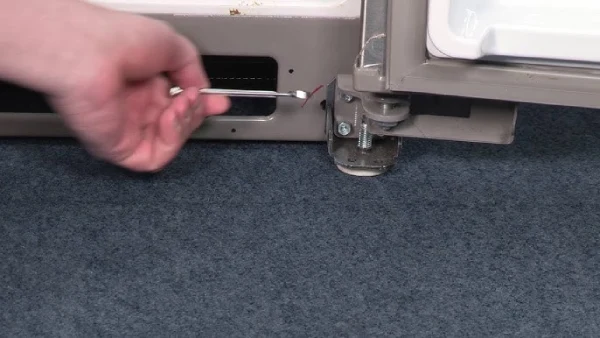
If the refrigerator is not level, water may flow incorrectly and escape the drainage system.
Adjust leveling legs.
Verify that the appliance slightly tilts backward according to manufacturer specifications.
While any refrigerator can develop leaks over time, consumers frequently report water leakage problems with the following product families:
Samsung French Door Refrigerators
Samsung Family Hub Refrigerators
Samsung RF Series Models
Common issue: frozen or clogged defrost drains.
LG InstaView Refrigerators
LG French Door Models
LG Side-by-Side Refrigerators
Common issue: drainage system blockages and water line leaks.
Whirlpool WRX Series
Whirlpool French Door Models
Common issue: clogged drain tubes and faulty water filters.
GE Profile Refrigerators
GE French Door Refrigerators
Common issue: ice maker water line leaks.
Frigidaire Gallery Series
Frigidaire Professional Series
Common issue: drain pan and drainage system issues.
KitchenAid French Door Refrigerators
Common issue: clogged defrost drains.
Maytag Bottom-Freezer Models
Common issue: drainage blockages and condensation problems.
Follow these troubleshooting steps:
Disconnect power safely.
Clean the defrost drain.
Check for ice blockages.
Inspect the water filter.
Examine the water supply line.
Verify refrigerator leveling.
Inspect the drain pan.
Monitor for additional leaks.
If the leak persists after these steps, contact a qualified appliance repair technician.
Average repair costs vary depending on the problem:
| Repair Type | Estimated Labor Cost |
|---|---|
| Drain Tube Clearing (Water under crisper) | $99–199 |
| Water Inlet Valve Replacement | $179–249 |
| Water Filter Housing Replacement | $179–249 |
| Refrigerator Door Gasket / Seal Replacement | $199–249 |
| Leveling / Vibration Adjustment | $99–199 |
Costs depend on refrigerator brand, model, and location.
To reduce the risk of future leaks:
Replace water filters regularly.
Clean drain openings every few months.
Avoid blocking air vents.
Inspect water supply connections annually.
Keep refrigerator doors properly sealed.
Schedule preventive maintenance when necessary.
Regular maintenance can significantly extend the lifespan of your refrigerator.
A fridge leaking water is usually caused by a clogged defrost drain, frozen drain tube, damaged water line, faulty water filter, or cracked drain pan. Early diagnosis and routine maintenance can prevent expensive repairs and help keep your refrigerator operating efficiently. Whether you own a Samsung, LG, Whirlpool, GE, Frigidaire, KitchenAid, or Maytag refrigerator, addressing leaks promptly will protect both your appliance and your home.
A refrigerator may leak water due to a clogged defrost drain, damaged water supply line, cracked drain pan, faulty door seal, or problems with the ice maker or water dispenser system.
While a small leak may not be immediately dangerous, standing water can create slip hazards, damage flooring, and potentially affect nearby electrical components if left unaddressed.
A clogged defrost drain often causes water to collect inside the refrigerator, under crisper drawers, or on the floor beneath the appliance.
Yes. Cracked, loose, or worn water supply lines can leak behind or underneath the refrigerator, especially on models with ice makers and water dispensers.
Water underneath the refrigerator is commonly caused by a blocked defrost drain, overflowing drain pan, condensation issues, or a leaking water connection.
Yes. A damaged door gasket allows warm air to enter the refrigerator, creating excess condensation that can lead to water accumulation and leaks.
If the source of the leak cannot be identified, or if the problem involves internal plumbing, electronic controls, or recurring water leaks, professional diagnosis and repair are recommended.
 Request Service
 (647) 492-7773
