

Article Reviewed & Technically Verified by Daniel V., Lead EPA-Certified Technician (15+ Years Experience)



Don’t see your issue? Just call — we’ve likely fixed it before.
Capital Cooking appliances are built around professional-style cooking performance, with ranges, rangetops, wall ovens, cooktops, ventilation, and undercounter refrigeration designed for demanding kitchens. When a burner stops igniting, an oven loses temperature, a hood stops moving air, or an undercounter refrigerator won’t maintain temperature, the right diagnosis matters.
Our technicians diagnose Capital Cooking appliances using the exact model and configuration to identify the failed component instead of replacing parts by guesswork. We handle heating elements, burners, igniters, temperature controls, convection fans, cooling fans, door components, electronic controls, refrigeration components, and ventilation systems.
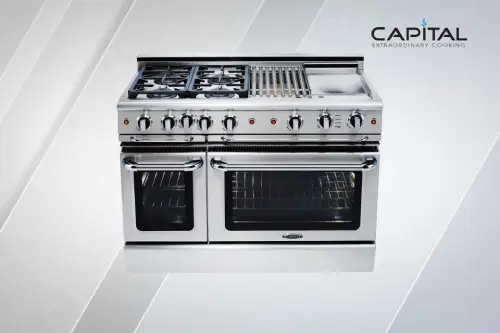
Capital ranges combine professional rangetop configurations with gas or dual-fuel oven systems. We service Capital Classic Chef, Culinarian, Grand Chef, Grand Chef Dual Fuel, and other compatible range configurations when burners, ovens, controls, convection systems, or other components fail.
Get Help Today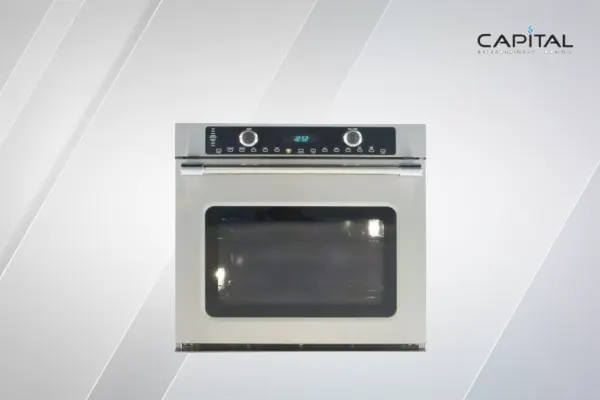
Capital offers 30-inch electric built-in wall ovens in single- and double-oven configurations. We diagnose heating elements, convection systems, temperature sensors, cooling fans, door components, controls, displays, and self-cleaning problems on compatible Capital wall ovens.
Book Repair Now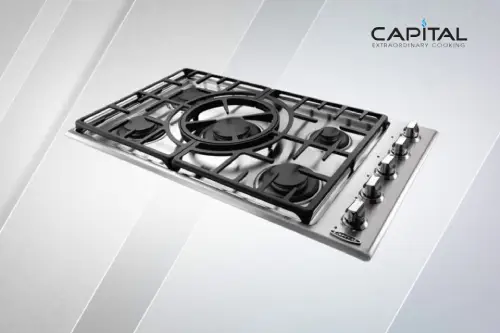
Capital’s drop-in cooktops use high-output gas burners, electronic ignition, individual igniters, continuous cast-iron grates, and dedicated burner controls. We repair ignition problems, burner faults, control issues, and other performance problems on compatible Capital cooktops.
Call Now to Book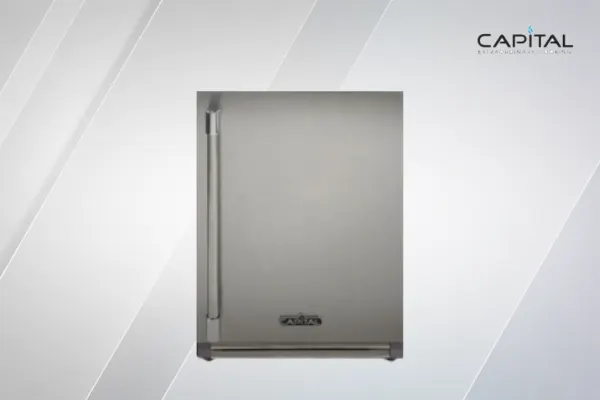
Capital’s undercounter refrigeration line includes single-door and two-drawer models with digital temperature controls, automatic defrost, variable-speed compressors, internal evaporator cooling, and built-in or freestanding ventilation. We diagnose cooling, temperature, compressor, fan, control, and door-seal problems.
Call for Fast ServiceRegular maintenance helps professional-style Capital appliances maintain reliable cooking and ventilation performance. Burner ports, igniters, grates, filters, fans, door seals, cooling systems, and control components can all affect appliance performance when they become dirty, worn, restricted, or faulty.
Our technicians can inspect the appliance, identify the failed component, test its operation, and recommend the appropriate repair based on the exact Capital model. For Capital ranges and rangetops, we also check burner ignition, flame performance, griddle or grill operation, and oven heating where applicable.
Capital’s official manuals do not publish a universal E/F-style error-code table for the range models reviewed. Instead, the manufacturer’s troubleshooting documentation identifies appliance faults by symptoms and operating behavior. The indicators below are based on Capital’s official Use & Care documentation rather than third-party error-code lists.
| Fault / indicator | What it means | Likely cause / what to check |
|---|---|---|
| Burner does not light | Ignition or burner problem | Check that the burner ports are clean and that the electronic igniter is producing spark. Capital specifically notes that burner ports should be cleaned when a burner does not light even though the igniters click. |
| Igniter clicks but burner does not ignite | Gas/ignition problem | Burner ports may be blocked, the burner cap may not be positioned correctly, or the gas supply/ignition system may require professional diagnosis. |
| No electrical power | Electronic ignition and controls may not operate | Capital’s manual states that the range burners can be manually lit during an electrical failure, but the gas grill and Thermo-Griddle cannot be manually lit during a power failure. |
| Oven not heating | Oven heating system fault | Depending on the Capital model, inspect the oven heating system, ignition, temperature controls, and associated components. Professional diagnosis is recommended when the oven does not heat correctly. |
| Oven temperature inaccurate | Temperature regulation problem | Possible temperature-sensing, control, heating, or calibration issue. The exact cause depends on the Capital range or wall-oven model. |
| Convection fan not operating | Convection system fault | Capital ovens use dedicated convection fans for specified cooking modes. If the fan does not operate when the selected mode requires it, the fan or control system may need diagnosis. |
| Cooling fan continues running | Cooling system operating | Capital dual-fuel models use a two-speed cooling fan system. Fan operation can continue as part of normal appliance cooling; persistent abnormal operation should be professionally checked. |
| Self-clean does not operate correctly | Self-cleaning function problem | Capital self-clean models use dedicated oven controls and a cooling system. If the cycle cannot start, complete, or behaves abnormally, the control, door-locking, heating, or safety system may require service. |
| Control panel not responding | Electronic control fault | Power interruption, control-panel failure, or an electronic control problem may be responsible. The exact diagnostic procedure depends on the model. |
| Refrigerator not cooling | Undercounter refrigeration cooling problem | Capital undercounter refrigerators use a variable-speed compressor, fan-driven evaporator cooling, automatic defrost, and digital temperature control. A failure in any of these systems can affect cooling. |
Capital Cooking model behavior and diagnostics vary by appliance and configuration. The official documentation reviewed does not provide a universal numeric error-code list. If your Capital appliance displays a specific message, behaves unexpectedly, or stops working, give us a call and we’ll diagnose the exact model.
From a Capital range that won’t heat to a rangetop burner that won’t ignite, a wall oven with temperature problems, a vent hood with weak airflow, or an undercounter refrigerator that isn’t cooling, professional diagnosis can help identify the actual cause.
Our technicians service Capital Cooking ranges, rangetops, wall ovens, cooktops, ventilation hoods, undercounter refrigeration, and integrated grill or griddle components and can help determine the right repair for your appliance.
A Capital burner that continues clicking can have an ignition switch, spark module, burner cap, or moisture-related problem. Our technician can identify whether the issue is isolated to one burner or affects the ignition system more broadly.
Slow preheating may indicate a problem with the heating element, gas ignition system, temperature sensor, convection system, or control components. We test the oven rather than replacing parts based only on the symptom.
An uneven flame can be caused by a blocked burner port, incorrectly positioned burner components, gas-pressure issues, or a problem with the burner assembly. We inspect the burner and ignition system to determine the actual cause.
If your Capital oven consistently runs too hot or too cold, the problem may involve the temperature sensor, calibration, heating system, or electronic controls. A technician can test the oven’s actual operating temperature and diagnose the problem.
Uneven griddle heating can occur when the burner system, ignition, gas supply, or griddle components are not operating correctly. We can diagnose heating problems affecting Capital griddles and other specialized cooking surfaces.
A blower that operates without providing adequate ventilation may have restricted airflow, a blower problem, clogged filters, or an issue somewhere in the ventilation system. We inspect the hood and related components to determine why airflow has decreased.
The convection fan operating does not necessarily mean the entire convection system is working correctly. Air circulation, the fan assembly, temperature control, and heating components can all affect cooking performance.
 Request Service
 (647) 492-7773
