An ice maker overflowing with water is one of the most common refrigerator problems homeowners face. When an ice maker overfills, water can leak into the freezer compartment, create large blocks of ice, damage internal components, and even cause water to pool on the kitchen floor. This issue can occur in virtually any refrigerator brand, including Whirlpool, Samsung, LG, GE Appliances, Frigidaire, KitchenAid, Maytag, Kenmore, Bosch, Electrolux, Amana, JennAir, Sub-Zero, Viking, Thermador, Dacor, Fisher & Paykel, Haier, Hisense, Miele, and others.
If your ice maker is overflowing, it is important to address the problem quickly. Ignoring the issue can lead to expensive repairs, water damage, mold growth, and reduced refrigerator performance.
An overflowing ice maker occurs when more water enters the ice mold than necessary during the fill cycle. Instead of filling only the designated ice tray compartments, excess water spills over the edges and freezes inside the freezer. Over time, this can create thick ice accumulation around the ice maker assembly, block air circulation, and interfere with normal operation.
Many refrigerator owners first notice the problem when they see unusually large ice cubes, ice cubes stuck together, sheets of ice beneath the ice maker, or water dripping from the dispenser area.
Several warning signs can indicate that your refrigerator ice maker is receiving too much water:
Water leaking from the ice maker assembly.
Ice cubes larger than normal.
Ice cubes fused together.
Ice accumulation around the fill tube.
Frozen water beneath the ice bin.
Water dripping into the freezer compartment.
Ice production that does not stop.
Water pooling under the refrigerator.
Frost buildup near the ice maker.
Reduced cooling performance caused by restricted airflow.
These symptoms may appear gradually or suddenly depending on the source of the problem.
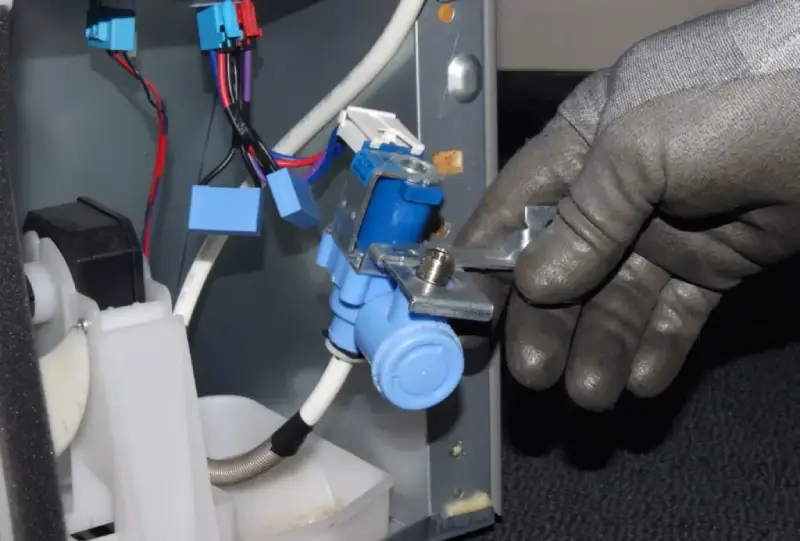
One of the leading causes of ice maker overflow is a defective water inlet valve. The valve controls the amount of water entering the ice maker during each production cycle.
Over time, mineral deposits, wear, and internal damage can prevent the valve from closing completely. Even a small amount of water leakage can slowly fill the ice mold beyond its intended capacity. As water continues entering the system, overflow occurs and excess ice forms throughout the freezer compartment.
This problem is commonly reported in Whirlpool, Maytag, KitchenAid, Kenmore, Amana, Samsung, LG, Frigidaire, and GE refrigerators.
Refrigerators are designed to operate within a specific water pressure range. When household water pressure exceeds manufacturer specifications, the ice maker may receive more water than it is programmed to handle.
High water pressure can cause:
Oversized ice cubes.
Water splashing during fill cycles.
Continuous dripping from the fill tube.
Overflowing ice molds.
Internal freezer leaks.
Installing a pressure regulator may be necessary if excessive water pressure is identified.
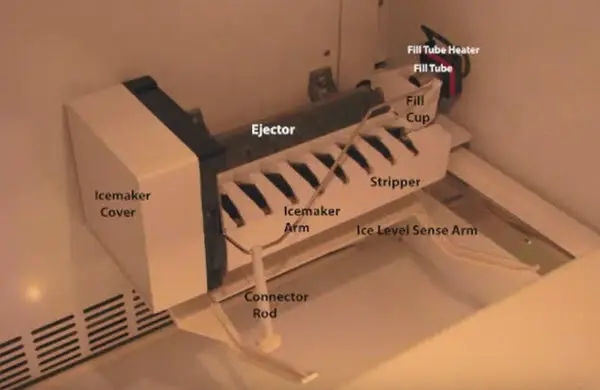
The fill tube directs water into the ice mold. If this tube becomes partially frozen, water may spray in unexpected directions instead of entering the mold properly.
A frozen fill tube often develops because of:
Low freezer temperatures.
Minor water valve leaks.
Restricted water flow.
Poor airflow within the freezer.
When water misses the mold, it freezes around the ice maker and eventually creates large ice formations that interfere with normal operation.
The ice maker assembly contains motors, sensors, switches, and timing mechanisms responsible for controlling the entire ice production cycle.
A malfunctioning assembly may:
Extend fill times.
Trigger multiple fill cycles.
Fail to stop water flow.
Produce malformed ice cubes.
Cause constant overflow.
In many cases, replacing the complete ice maker assembly is more cost-effective than repairing individual components.
Modern refrigerators from Samsung, LG, GE Appliances, Bosch, Electrolux, Miele, and Fisher & Paykel rely heavily on electronic control boards.
The control board manages:
Water dispensing.
Ice production cycles.
Temperature regulation.
Sensor communication.
If the board sends incorrect commands, the ice maker may receive excessive water, resulting in repeated overfilling and leakage.
Whirlpool refrigerators frequently experience overflow due to worn inlet valves, frozen fill tubes, and aging ice maker modules.
Samsung models are known for occasional ice room freezing issues that can contribute to overflow and water leakage.
LG refrigerators may develop sensor failures, valve problems, or ice maker assembly defects that cause overfilling.
GE refrigerators can experience electronic control issues and fill valve failures that result in excessive water entering the mold.
Frigidaire units often develop frozen fill tubes and valve-related water leaks.
KitchenAid refrigerators commonly share components with Whirlpool and may experience similar water management issues.
Maytag owners frequently report leaking inlet valves and overfilled ice trays.
Kenmore refrigerators may develop timer failures or water valve issues that cause continuous filling.
Bosch refrigerators can experience sensor malfunctions and electronic control errors that affect water levels.
Electrolux models occasionally develop valve leakage and fill tube freezing problems.
Sub-Zero refrigerators may experience overflow due to aging water valves or ice maker mechanism failures.
Premium refrigerator brands can also suffer from water valve failures, sensor problems, and electronic control issues that result in overflowing ice makers.
Because multiple components can cause an overflowing ice maker, proper diagnosis is essential. A trained appliance technician can inspect the water inlet valve, fill tube, water pressure, ice maker assembly, temperature settings, sensors, and electronic controls to determine the exact source of the problem.
Replacing a defective component early can prevent additional freezer damage and restore normal ice production.
An overflowing ice maker should never be ignored. Whether you own a Whirlpool, Samsung, LG, GE Appliances, Frigidaire, KitchenAid, Maytag, Kenmore, Bosch, Electrolux, Sub-Zero, Viking, Thermador, Dacor, JennAir, Haier, Hisense, Fisher & Paykel, or Miele refrigerator, the most common causes include faulty water inlet valves, frozen fill tubes, excessive water pressure, defective ice maker assemblies, and electronic control board failures. Prompt troubleshooting and professional repair can eliminate leaks, prevent costly water damage, and keep your refrigerator operating efficiently for years to come.
An overflowing ice maker is often caused by a faulty water inlet valve, excessive water pressure, a misaligned fill tube, or a malfunctioning ice maker control module.
Yes. If the water pressure is too high, the inlet valve may allow more water into the ice mold than intended, resulting in overflow and ice buildup.
The water inlet valve controls the amount of water entering the ice maker. If the valve becomes worn or fails to close properly, it can continuously leak water into the ice mold.
Leaks can occur when the fill tube is blocked, cracked, or improperly positioned, causing water to spill outside the ice maker tray.
Yes. A partially frozen or clogged fill tube can redirect water, leading to overfilling, leaks, and excessive ice accumulation inside the freezer.
Start by checking the water pressure, inspecting the fill tube, replacing a faulty water inlet valve if necessary, and ensuring the ice maker is properly installed and aligned.
Book online and save $25, or call and talk to a technician now.
 Request Service
 (647) 492-7773
