iconmonstr whats hot 1
We also fix gas appliances

Certified Gas Appliance Repair

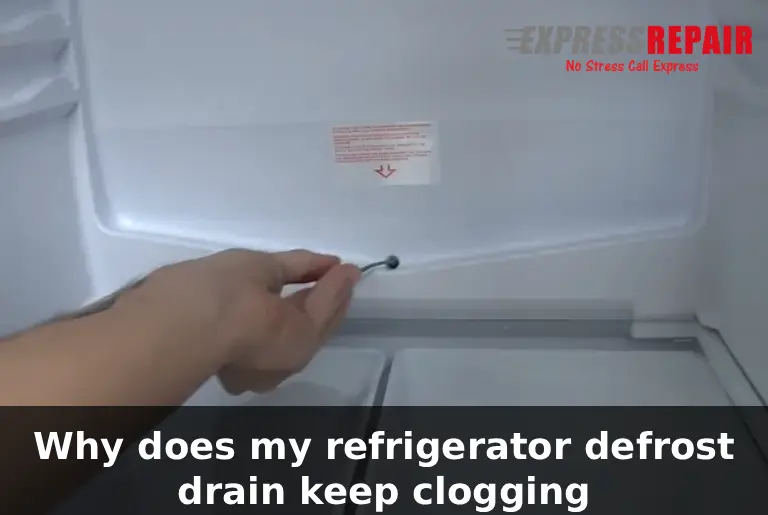
Why does my refrigerator defrost drain keep clogging?

Why does my refrigerator defrost drain keep clogging

Why your defrost drain keeps clogging

During the defrost cycle, frost melts and should flow into a small drain hole inside the refrigerator/freezer, travel down a drain tube inside the cabinet, and end up in the evaporation pan underneath the fridge where it evaporates. When any part of that path is blocked, water backs up and you may get puddles, ice, or leaks.

Is the clog inside or outside?

  • Most common: the clog starts inside at the drain hole or the first section of the drain channel/tube (food crumbs + ice).
  • Also common: the blockage is at the bottom end of the tube (near the evaporation pan), especially if there’s a rubber one-way “duckbill” valve that traps sludge.

Quick symptom guide: where to check first

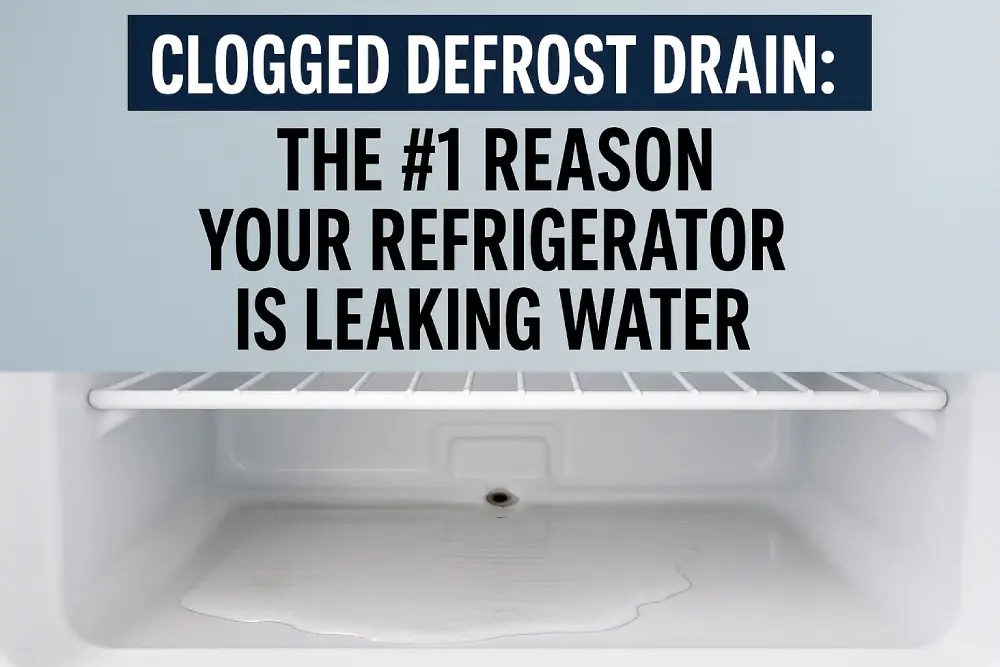
  • Ice sheet on the freezer floor → usually an ice plug inside the drain area.
  • Water pooling under crisper drawers → drain is slow/blocked, water can’t exit fast enough.
  • Drain hole looks clear but water still backs up → check the bottom/outside outlet (tube end/duckbill valve).
  • Musty smell or slimy residuebiofilm (mold/algae) in the tube.

Common causes (and what they look like)

Cause Typical symptoms Why it keeps happening
Food crumbs/sludge in the drain hole Water pooling inside, damp smell Debris washes into the drain during defrost and builds up
Ice plug in the drain Ice on freezer bottom; recurring leaks Water drains slowly, then refreezes around the drain
Mold/algae (biofilm) in the drain tube Musty odor; slow draining Warm, damp tube grows buildup over time
Clogged “duckbill” drain grommet (some models) Repeated backups even after cleaning the top hole Sludge collects at the one-way valve and sticks shut
Refrigerator not level Water leaks from one side Water doesn’t flow toward the drain correctly
Door gasket leak / frequent door opening Excess frost and water More moisture → more frost → more defrost water and icing
Defrost system problem (heater/thermostat) Heavy frost + repeated ice clogs Incomplete defrost creates slush that refreezes in the drain

How to fix a clogged defrost drain (step by step)

How to fix a clogged defrost drain

Before you start

  • Unplug the refrigerator (safety).
  • Remove food from the immediate area and place towels to catch water.

Step 1: Access the drain area

  • On most frost-free fridges, the drain is in the freezer, behind the rear interior panel near the evaporator coils and a small drain trough.

Step 2: Melt and remove ice (if present)

  • Use warm towels or a hair dryer on low, moving constantly.
  • Avoid sharp tools (they can puncture plastic liners or damage components).

Step 3: Clear the drain hole from the inside

  • Use a turkey baster/syringe to flush the hole with very warm (not boiling) water.
  • If needed, gently loosen debris with a flexible plastic zip tie or pipe cleaner (don’t force it).

Step 4: Flush and clean the drain tube

  • Flush several times until the water drains freely.
  • For odor/slime: flush with warm water + a small amount of baking soda solution, then flush again with plain warm water.

Step 5: Check the bottom/outside drain outlet

If it still backs up or returns quickly:
  • Pull the fridge out and locate the evaporation pan underneath (usually near the compressor).
  • Find the end of the drain tube above/near the pan. Clean the outlet.
  • If there’s a rubber “duckbill” valve, remove it and wash it thoroughly. If it repeatedly sticks shut, consider replacing it.

Step 6: Confirm it’s fixed

  • Pour a small amount of warm water into the inside drain hole.
  • You should see it flow into the evaporation pan underneath.

Prevention tips (to stop repeat clogs)

  • Wipe spills and cover food to reduce debris washing into the drain.
  • Flush the drain every 3–6 months with warm water if you’ve had clogs before.
  • Check door seals (gaskets) and keep doors closed as much as possible to reduce moisture and frost.
  • Level the refrigerator so water naturally flows toward the drain.
  • Don’t overpack the freezer—blocked airflow can increase frost and icing around the drain.

When to call a technician

Get service if:
  • The drain clears but refreezes within days (possible defrost heater/thermostat/control issue).
  • You see heavy frost returning regularly.
  • You suspect a cracked/misaligned drain trough or internal drainage parts.
If these do not work or you do not feel comfortable trying to check the issue on your own, our experts can help you. Give us a call and one of our experienced fridge repair technicians will come take a look at your fridge for you as soon as possible.
Available 7 am – 10 pm including weekends and holidays
appliance repair experience
ExperienceLicensed technicians with over 25 years of experience
full appliances warranty
WarrantyFull warranty on all services and parts
appliance repair experts
ExcellenceWe offer 100% Satisfaction Guaranteed
Your fridge is the one appliance that you simply cannot do without. So, when you need fast repairs, call Express Repair GTA at (647) 492-7773. Here are a few reasons why you should call us:

Frequently Questions People Ask Us

Usually because debris (food particles) or biofilm builds up in the drain tube, or because ice refreezes in the drain due to excess frost and moisture.

Better not. Use very warm water, not boiling—boiling water can warp plastic parts or crack cold surfaces.

It’s a small rubber one-way valve at the bottom of the drain tube. It can trap sludge and stick shut, causing repeat backups even after you clear the top drain hole.

That’s classic drain icing: defrost water can’t drain fast enough and refreezes on the freezer bottom.

After cleaning, pour a little warm water into the drain hole and confirm it flows into the evaporation pan underneath the fridge.

A light flush every 3–6 months is a good routine, especially if you’ve had clogs before.