If you smell burning or see smoke, unplug immediately and don’t restart until inspected.
What “too hot” means (and what can be normal)
A refrigerator compressor (the black metal “tank” near the bottom back) often feels hot during normal operation. That’s because it compresses refrigerant and pushes heat out of the system.
It’s more likely a real problem if you also notice:
The fridge or freezer isn’t cooling properly
The compressor runs almost nonstop
You hear repeated clicking (trying to start, then stopping)
There’s a burnt smell or unusual heat at the back panel
The compressor is extremely hot and performance is getting worse
Most common reasons a compressor overheats
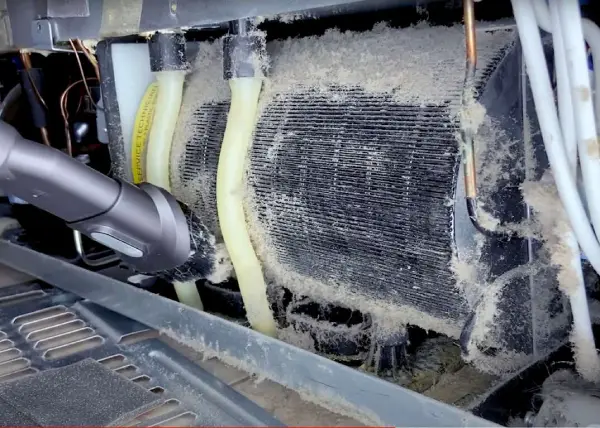
Dirty condenser coils
Dust, grease, and pet hair on the condenser coils prevent heat from escaping. The compressor has to work harder and longer, so it runs hotter.
Typical signs:
Dust buildup underneath or behind the fridge
Hot sides of the refrigerator
Longer run times, poor cooling
Not enough airflow around the refrigerator
If the fridge is pushed too close to the wall or trapped in a tight cabinet, hot air can’t leave the compressor area.
Typical signs:
The back/bottom area feels unusually hot
Cooling improves when the fridge is pulled away from the wall
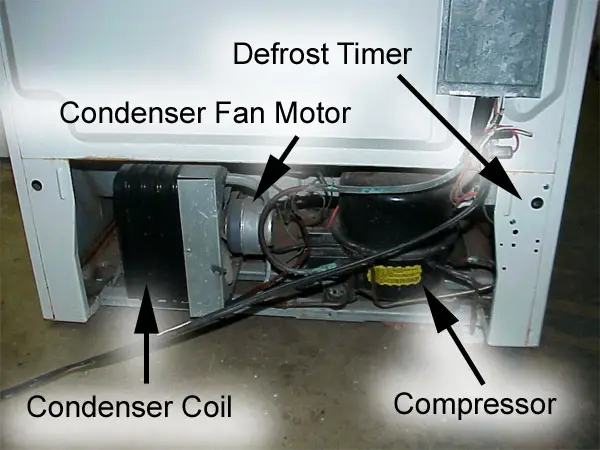
Condenser fan not working
Many refrigerators have a fan near the compressor that moves heat away. If the fan is blocked or dead, heat builds up quickly.
Typical signs:
The fan doesn’t spin while the compressor is running
You hear grinding, buzzing, or a loud hum
The compressor area becomes hot fast
Evaporator fan problem (inside the freezer)
This fan circulates cold air through the freezer and fridge. If it fails, the fridge warms up and the compressor runs constantly trying to compensate.
Typical signs:
Weak airflow from interior vents
Uneven temperatures (some areas cold, others warm)
Noise from the freezer area, or total silence when it should be running
Frost or ice buildup from a defrost issue
If the defrost system fails, ice can cover the evaporator coil and block airflow. Cooling performance drops, so the compressor runs longer and overheats.
Typical signs:
Heavy frost on the freezer back wall
Fridge section warm while freezer is “kind of cold”
Water leaks during partial melting
Door gasket leak or frequent warm-air entry
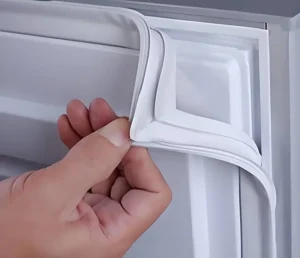
A damaged or dirty door seal lets warm air in, increasing the load. The compressor runs longer to keep temperatures down.
Typical signs:
Condensation or frost near the door edges
Door doesn’t close firmly or pops open
Cracks, gaps, or looseness in the gasket
Overfilling or blocked vents inside
If food blocks the vents, cold air can’t circulate properly. The compressor keeps running because the temperature sensors don’t reach the target.
Typical signs:
Some shelves are warm while others are too cold
Items pressed against vent openings
Temperature settings too cold
If the settings are at maximum cold, the compressor may run for long periods even when nothing is “broken.”
Typical signs:
Controls set to the coldest level
Long run times even in a cool room
Start relay or capacitor issues (electrical)
If the compressor struggles to start, it can overheat and cycle on/off with clicking.
Typical signs:
Repeated clicking every few minutes
Compressor starts briefly, then stops
Poor cooling
Refrigerant leak or sealed-system restriction (professional repair)
When refrigerant is low or the sealed system is restricted, heat transfer becomes inefficient. The compressor runs continuously and gets very hot, but cooling remains weak.
Typical signs:
Poor cooling even after cleaning coils and confirming fans work
Compressor runs nonstop for hours
Uneven frosting patterns inside the freezer
Safe steps you can try at home
Improve ventilation
Pull the fridge away from the wall.
Ensure there is space for air to move behind and underneath.
This reduces heat buildup and can lower compressor temperature.
Clean the condenser coils
Unplug the refrigerator.
Locate the coils (either on the back or underneath behind the bottom grille).
Use a coil brush and vacuum to remove dust.
Plug it back in and monitor performance for several hours.
This is one of the highest-impact fixes.
Check the condenser fan (if your model has one)
Look for a fan near the compressor area.
When the compressor is running, the fan should usually be spinning.
Unplug the fridge before removing any debris.
If the fan doesn’t run after obstructions are cleared, the fan motor may need replacement.
Check for frost buildup and airflow problems
Feel for airflow from vents inside the fridge/freezer.
Inspect the freezer back wall for heavy frost.
If there’s heavy frost:
Unplug the fridge and let it fully defrost with doors open (towels ready).
If heavy frost returns quickly, the defrost system likely needs service.
Check the door seals
Clean the gasket with warm soapy water.
Do a paper test: close the door on a sheet of paper. If it pulls out easily, the seal may be weak.
Replace the gasket if it’s cracked, torn, or no longer sealing.
Correct temperature settings and internal loading
Recommended targets:
Fridge: about 3–4°C (37–40°F)
Freezer: about -18°C (0°F)
Also:
Don’t block vents with food containers.
Avoid packing the freezer and fridge so tightly that air can’t circulate.
When to call a technician
Get professional help if you notice:
Clicking with failure to start properly
Burning smell, melted plastic, or signs of overheating wiring
Cooling is poor even though coils are clean and fans are working
Compressor is extremely hot and runs nonstop for many hours
You suspect a refrigerant leak or sealed-system issue
Sealed-system and many electrical diagnostics require special tools and training.
The compressor is the heart of your refrigerator, and there are many factors that can cause it to get too hot. But don’t worry, we can help you. When you need help with your fridge, our trained and experienced fridge repair technicians can solve your issues for you as soon as possible.
Available 7 am – 10 pm
including weekends and holidays
ExperienceLicensed technicians with over 25 years of experience
WarrantyFull warranty
on all services
and parts
ExcellenceWe offer 100% Satisfaction Guaranteed
Your fridge is the one appliance that you simply cannot do without. So, when you need fast repairs, call Express Repair GTA at (647) 492-7773. Here are a few reasons why you should call us:
Refrigerator Compressor Is Too Hot What To DO Frequently Questions People Ask Us
A compressor often feels hot during normal operation because it compresses refrigerant and releases heat through the condenser. It becomes a problem mainly when cooling performance drops, the compressor runs nonstop, or you hear clicking or smell burning.
There isn’t one perfect number you can judge by touch alone. If it’s very hot and you also have poor cooling, constant running, repeated clicking, or a burnt smell, that’s a strong sign something is wrong.
Usually it’s not dangerous by itself, but it can be if there’s a burnt smell, melting plastic, smoke, or damaged wiring. In those cases unplug the fridge and call a technician.




 Request Service
 (647) 492-7773

