Contents
A refrigerator that isn’t cooling evenly, makes unusual noises, or causes food to spoil too quickly often points to one overlooked component — the fan. If your fridge fan is not working properly, the entire cooling system can suffer.
Whether you own a
Samsung RF28R7351SR (fridge model),
Whirlpool WRF555SDFZ (fridge model), or
LG LFXS28968S (fridge model), the internal fan system plays a critical role in circulating cold air. In this guide, you’ll learn how fridge fans work, what causes them to fail, and how to troubleshoot the issue safely at home — plus when it’s time to call for professional
fridge repair.
How a Refrigerator Fan Works
Modern refrigerators typically use two main fans:
1. Evaporator Fan (Freezer Compartment)
- Circulates cold air from the evaporator coils
- Distributes air to both freezer and fridge sections
- Located behind the rear freezer panel
2. Condenser Fan (Bottom Rear of Fridge)
- Cools the compressor and condenser coils
- Prevents overheating
- Found near the compressor at the back or bottom
If either fan fails, you may notice:
- Warm fridge but cold freezer
- Loud buzzing or clicking
- Frost buildup on the back panel
- Compressor running constantly
Common Reasons a Fridge Fan Stops Working
1. Ice Buildup Blocking the Fan
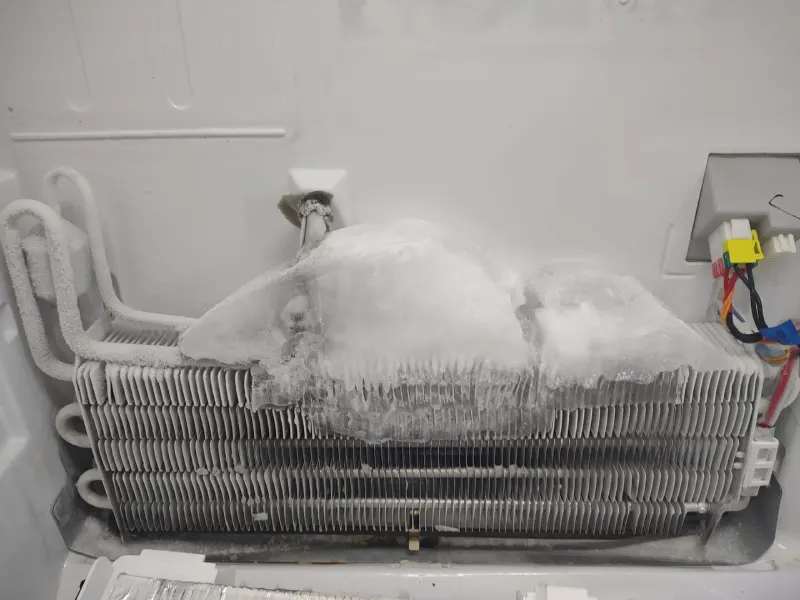
A failed
Defrost Heater (component) or faulty
Thermistor (temperature sensor component) can cause frost accumulation around the evaporator fan. Ice prevents the blades from spinning freely.
This is common in models like the
GE GNE27JYMFS (fridge model).
Symptoms:
- Grinding noise
- Inconsistent cooling
- Frost on freezer wall
2. Faulty Evaporator Fan Motor
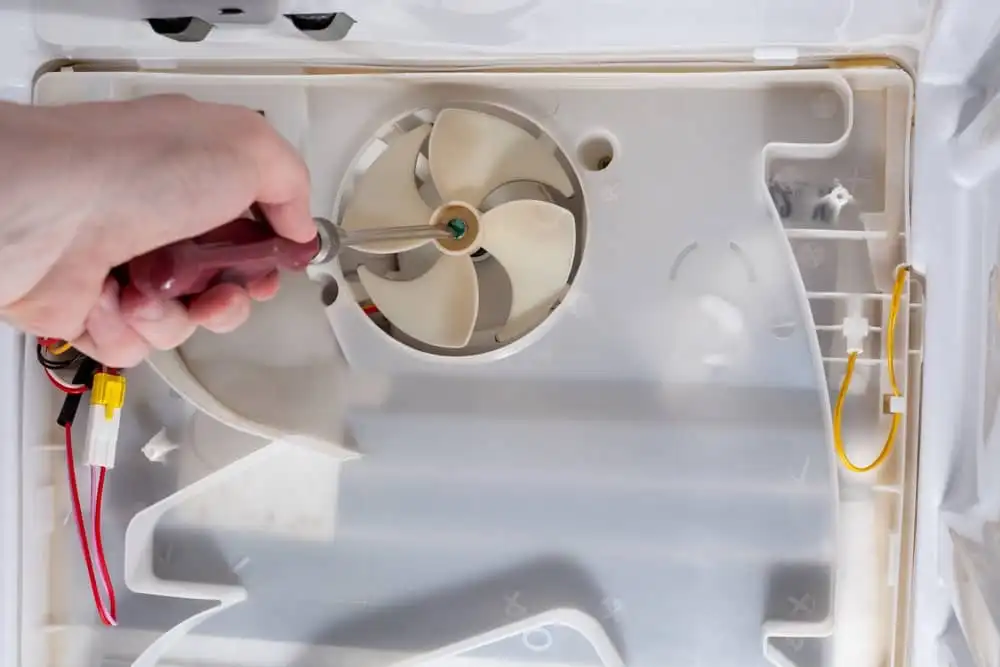
The
Evaporator Fan Motor (refrigerator component) can burn out over time.
You can test it using a
Fluke 117 multimeter (tool) to check for continuity.
Signs of failure:
- No airflow from vents
- Freezer cold but fridge warm
- Complete silence from freezer area
3. Defective Control Board
The
Main Control Board (electronic component) regulates power to the fan. If it fails, the fan may not receive voltage.
This issue appears in some advanced smart refrigerators like the
Bosch B36CL80ENS (fridge model).
4. Broken Fan Blade
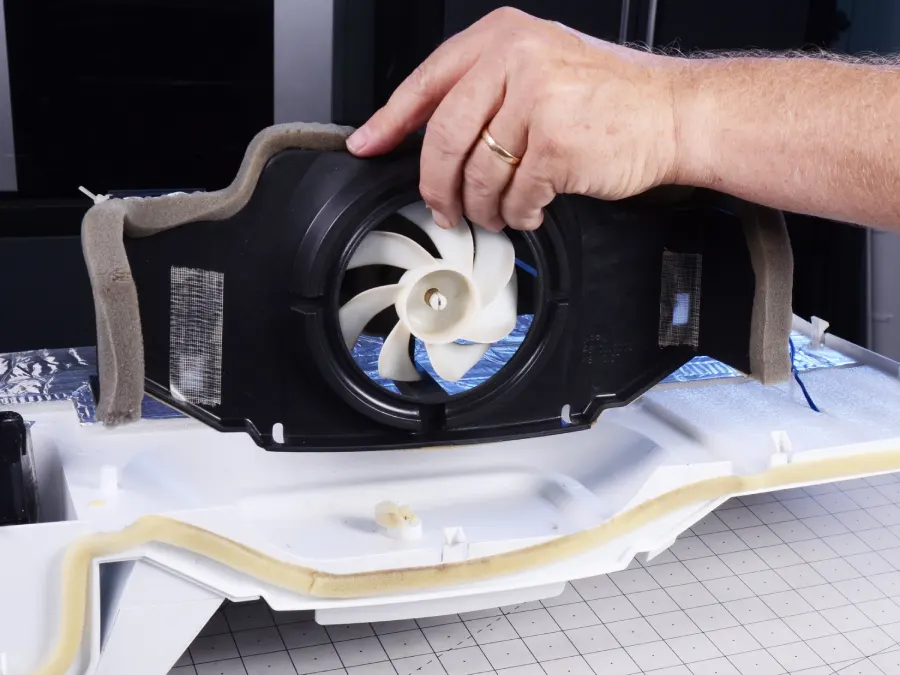
Sometimes the motor works, but the
Fan Blade (mechanical component) is cracked or jammed.
Listen for:
- Rattling noises
- Vibration
- Intermittent spinning
5. Wiring or Connector Issues
Loose wiring or damaged connectors can interrupt power to the fan motor.
Step-by-Step: How to Diagnose a Fridge Fan Problem
⚠️ Always unplug the refrigerator before starting repairs.
Step 1: Listen Carefully
Open the freezer door and press the door switch manually. The evaporator fan should start spinning.
No sound? The motor may be faulty.
Step 2: Check for Frost Buildup
Remove the freezer’s rear panel using a
DEWALT DCF680N2 screwdriver (tool).
If you see heavy ice buildup:
- Defrost manually for 24 hours
- Inspect the Defrost Thermostat (component) and Defrost Heater (component)
Step 3: Test the Fan Motor
- Disconnect the motor wiring harness.
- Use a Fluke 117 multimeter (tool).
- Check for continuity.
No continuity = Replace the motor.
Step 4: Inspect the Condenser Fan
Pull the fridge away from the wall.
Check if:
- Dust is blocking the fan
- The fan spins freely by hand
- The motor runs when plugged in
Clean coils using a vacuum and brush.
Step 5: Check Voltage Supply
If the motor tests good but doesn’t spin, test incoming voltage from the control board.
No voltage may indicate a faulty
Main Control Board (electronic component) — which often requires professional service.
Can You Fix It Yourself?
DIY-Friendly Repairs:
✔ Cleaning condenser coils
✔ Removing ice buildup
✔ Replacing evaporator fan motor
✔ Replacing damaged fan blade
Call a Professional If:
- The control board is defective
- You suspect wiring damage
- The compressor is overheating
- The fridge is still under warranty
Electrical diagnostics can be risky without experience.
If you’re unsure, it’s safer to schedule professional
fridge repair or use convenient
online booking to submit a request or call us directly at
(647) 492-7773 for fast assistance.
Preventing Future Fan Problems
To extend your refrigerator’s lifespan:
- Clean condenser coils every 6–12 months
- Avoid overloading freezer vents
- Check door seals regularly
- Keep temperature set between 37–40°F (3–4°C)
Preventative maintenance is far less expensive than replacing major components like a compressor.
When a Faulty Fan Becomes Urgent
A broken fan can lead to:
- Compressor failure
- Food spoilage
- Increased energy bills
- Complete system breakdown
If your fridge runs constantly or the temperature rises quickly, don’t delay repairs.
Conclusion
A fridge fan that isn’t working properly is more than a minor inconvenience — it affects cooling efficiency, energy usage, and food safety. In many cases, the problem can be diagnosed with simple tools like a
Fluke 117 multimeter (tool) and repaired by replacing the
Evaporator Fan Motor (refrigerator component) or clearing ice buildup.
However, if electrical testing or control board replacement is required, professional service is the safest solution.
If you need expert help, schedule reliable
fridge repair, use our easy
online booking, or call
(647) 492-7773 today. Quick action now can prevent costly repairs later.



 Request Service
 (647) 492-7773

