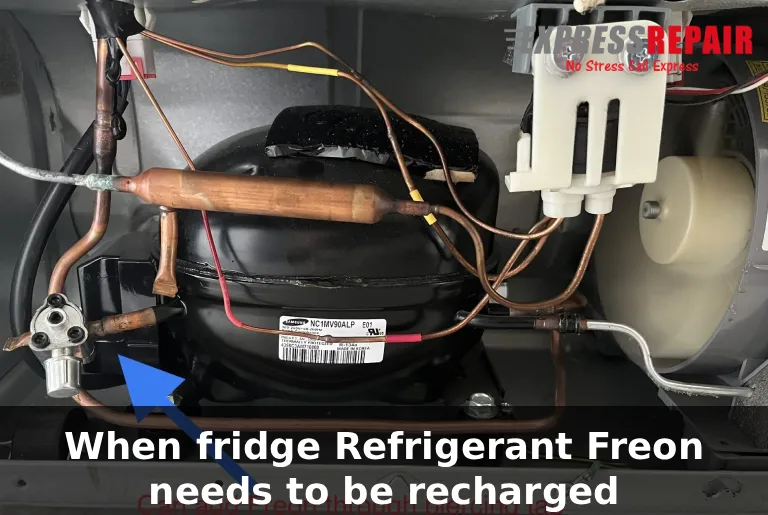
If your refrigerator is running but not cooling properly, many people immediately assume it “needs Freon.” In reality, a refrigerator like the Samsung RF28R7351SR (French door refrigerator) or the Whirlpool WRT518SZFM (top-freezer refrigerator) uses a sealed refrigerant system that should never lose refrigerant under normal conditions.
If refrigerant is low, there is always a leak — and simply adding Freon without fixing the leak will only provide temporary cooling.
This guide explains how to correctly diagnose low refrigerant in a fridge and how the recharge process is properly performed. Our trained and experienced fridge repair technicians can solve your issues for you as soon as possible.
Refrigerant can:
Never vent refrigerant into the air. Always recover remaining refrigerant using proper recovery equipment.
A refrigerator cooling system consists of:
In most modern units like the GE GTS22KGNRWW (top-freezer refrigerator), the refrigerant circulates continuously in a closed loop. If cooling drops, something is wrong — refrigerant does not “get used up.”
If ice cream is soft and the freezer stays around 20–25°F instead of 0°F, low refrigerant is possible.
Test it:
If both compartments are warm while the compressor runs constantly, suspect sealed system problems.
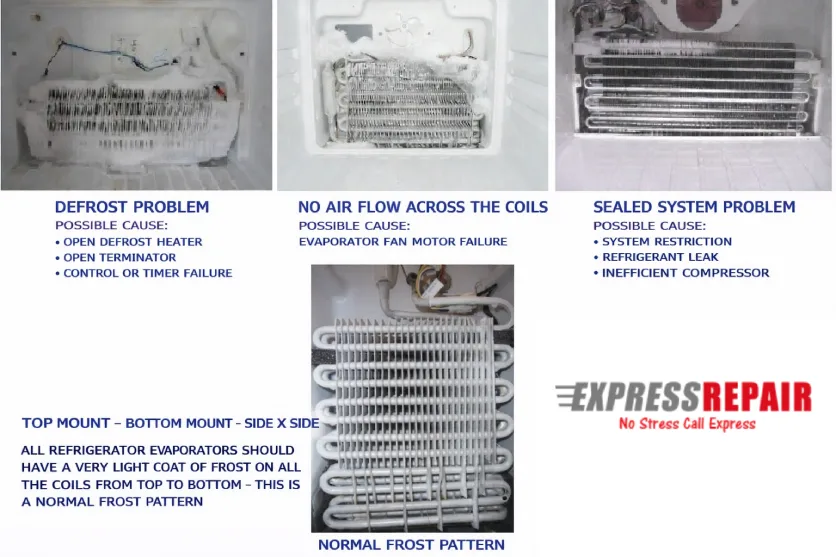
What You Should See:
For example, a Frigidaire FFTR1835VS (top-freezer refrigerator) with frost only on the top-left section of the evaporator almost always indicates a refrigerant leak.
Touch the compressor (black metal tank at rear bottom).
If it is:
This suggests the system cannot reach target pressure due to refrigerant loss.
You can verify electrical health using a Fluke 117 (digital multimeter) to test compressor start relay continuity before assuming refrigerant issues.
Low refrigerant is less common than:
Example:
A LG LTCS24223S (top-freezer refrigerator) may stop cooling due to a failed evaporator fan — not refrigerant. Always check airflow first.
⚠️ This procedure requires refrigeration tools and experience.
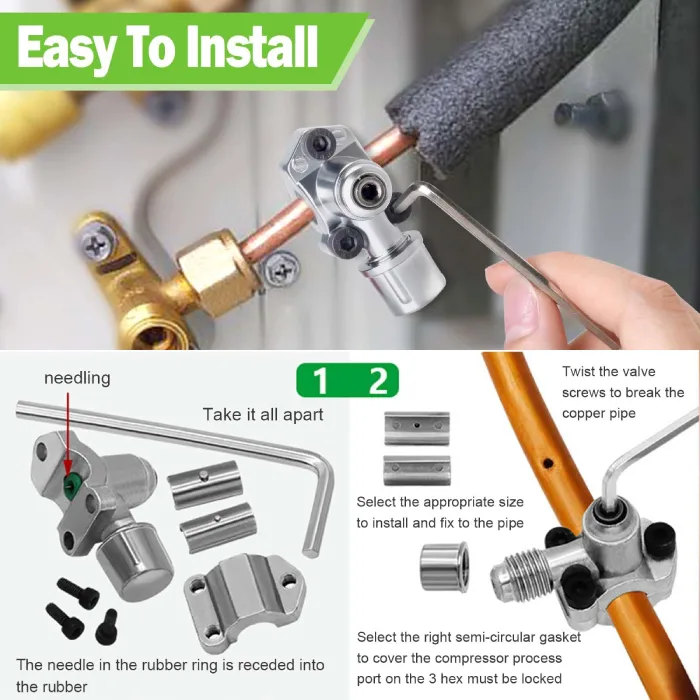
Most refrigerators do not have factory charging ports.
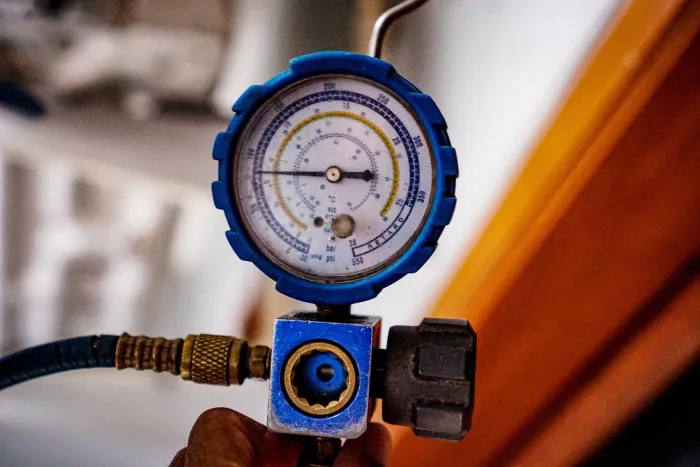
Connect a Yellow Jacket 42004 (manifold gauge set).
Typical static pressure for R-134a at room temperature (70°F):
If pressure is significantly lower, refrigerant is likely low.
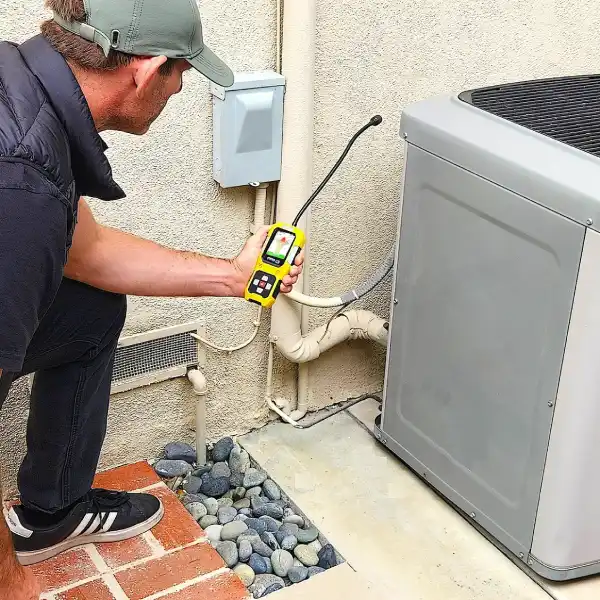
Use one of the following:
Common leak areas:
In many Whirlpool and GE models, evaporator leaks are the most common failure point.
⚠️ Refrigerant handling requires ODP (Ozone Depletion Prevention) certification in Canada.
In Canada, it is illegal to purchase, handle, recover, or recharge refrigerant without proper certification. Technicians must hold a valid ODP card issued by an approved provincial authority.
Simply adding refrigerant without repairing the leak is not a repair.
Depending on location:
Always install a new filter drier after opening the sealed system.
After repair:
This removes moisture and air.
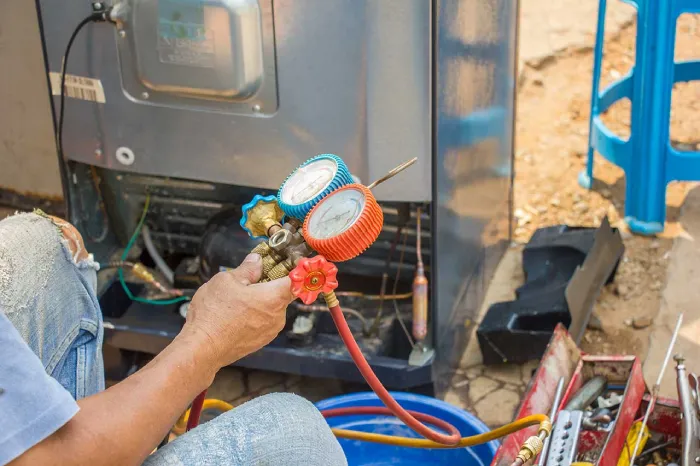
Refrigerators must be charged by weight, not pressure.
Overcharging can cause:
If your refrigerator:
Replacement may be more economical than sealed system repair.
 ExperienceLicensed technicians with over 25 years of experience
 WarrantyFull warranty
 ExcellenceWe offer 100% Satisfaction Guaranteed
Your fridge is the one appliance that you simply cannot do without. So, when you need fast repairs, call Express Repair GTA at (647) 492-7773. Here are a few reasons why you should call us:
No. A refrigerator like the Samsung RF28R7351SR (French door refrigerator) has a sealed system. Loss of refrigerant means a leak.
No. Automotive refrigerant kits are not designed for household refrigerators and can damage the system.
The entire lifespan (10–20 years) if no leak develops.
No. Without repairing the leak, refrigerant will escape again.
Check the rating plate inside the cabinet or near the compressor. Most modern units use R-134a, while newer models may use R-600a (isobutane refrigerant).
 Request Service
 (647) 492-7773

